Slumped Fusing Glass
Dish Hand Painted
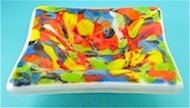
A small slumped fusing glass dish painted with glass powder fused and then finished in a steep slumping mold.
This fused art glass painted dish has been made from two pieces of fusing glass, one of which has been painted with glass powder frit and then fully fused to a clear base.
After fusing the glass was then deeply slumped in a small dish mold.
You can use either COE 90 or COE 96 glass; Coe 96 glass and powder were used for this tutorial.
Size and colors can be altered to suit your design choices.
Fusing Materials:
1 x 3 1/4 " square piece clear fusing glass.
1 X 3 1/2" square opaque white fusing glass.
Colored glass frit powder.
Klr-Fire or other painting medium.
Paint brush or thick cocktail sticks.
Glass cutter.
Glass fusing kiln.
Kiln washed shelf or thin fire paper.
Slumping mold.
Assembly & Painting:
Step 1. Cut one 3 1/4" square piece of clear fusing glass.
Step 2. Cut one 3 1/2" square piece of white fusing glass.
Step 3. Mix frit powder with Klr-Fire or other medium to achieve the correct painting consistency.
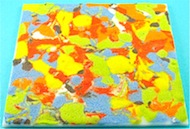
Step 4. Paint white art glass as detailed on the glass powder painting page.
For this exercise thick cocktail sticks were used to apply and blend the powder on the glass.
Step 5. When the paint is dry stack white fusing glass painted side up on clear glass and place on prepared kiln shelf and put in glass fusing kiln.
Fusing:
You can use your own firing schedule or use this one as a guide:
1. 600°F (331°C) up to 1000°F (538°C) hold 20 minutes
2. 600°F (331°C) up to 1150°F (622°C) hold 5 minutes
3. 1300°F (706°C) up to 1435°F (780°C) hold 25 minutes
4. AFAP* down to 960°F (516°C) hold 60 minutes
5. 600°F (331°C) down to 200°F (94°C)
6.Cool to room temperature.
(AFAP* as fast as possible)
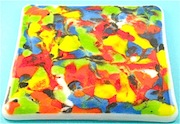
Step 6. Remove fused glass plate from glass kiln.
Step 7. Apply five or six kiln wash coats to a suitable slumping mold.
Place dish in mold.
Slumping:
The following schedule is a heavy slump schedule as the slumping mold is steep and deep.
1. 600°F (331°C) up to 1000°F (538°C) hold 20 minutes
3. 1300°F (706°C) up to 1435°F (780°C) hold 25 minutes
4. AFAP* down to 960°F (516°C) hold 60 minutes
5. 600°F (331°C) down to 200°F (94°C)
Monitor slumping to ensure that the glass slumps correctly.
Step 10. When cool, remove your slumped fused glass creation from the glass kiln.
The paint pattern for this dish is abstract with bold colors designed to produce an original piece of kiln formed fused glass art.
Return From Slumped Fusing Glass Dish To Glass Fusing Projects
Return To Home Page


